Published
Electric or diesel in 2026? A running-cost comparison
What does it really cost to run an electric and a diesel car in Lithuania? We count fuel, electricity, repairs and winter consumption without illusions.
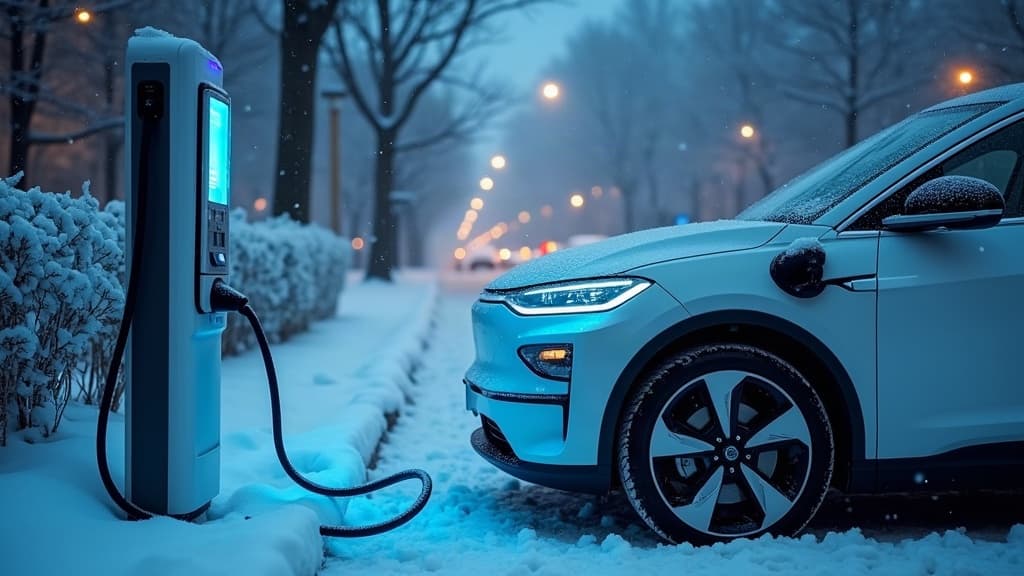
Charged at home, an electric car saves about 800-900 euros a year compared with a diesel compact. That holds only as long as you have somewhere to charge: without your own spot in the yard or a socket at work the gap melts quickly, and then a diesel or a hybrid again becomes the logical choice. The figures below are counted for a typical profile: 15 thousand km a year, mostly city and suburban routes.
Electricity and fuel bills differ several times over
A compact-class diesel uses about 5.5-6 l/100 km around town. At roughly 1.50 euros per litre the annual fuel bill lands between 1,250 and 1,350 euros.
An electric car needs about 15-17 kWh/100 km, a little more in winter when the heater works. Charging at home on a night tariff, at about 0.15-0.20 euros per kilowatt-hour, a year costs 350-500 euros. At public fast chargers electricity costs several times more, so there the spend approaches diesel levels.
The rough annual difference when home charging is 800-900 euros in favour of the electric. Over five years that already amounts to new tyres plus more than one sizeable repair. But all this arithmetic holds only up to one line.
Where you charge matters more than the tariff
An electric car with its own wallbox in the yard and the very same car in an apartment block without charging are two different deals. Unable to charge at home or at work, the economy of electricity loses its point: you are left with a pricier car and route planning around public chargers.
In winter the battery also feeds the heating, the lights and seat warming, so the real range drops by 20-30 percent. A diesel through the same winter simply warms up a little slower.
Another nuance is battery age. Older electrics degrade, first-generation Nissan Leaf being the classic case, so buy a used EV only after checking the battery state of health (SOH). Newer models with active cooling hold up better, and manufacturers cover battery failures with long warranties.
Short city routes are what make a diesel expensive
On short urban trips the diesel particulate filter (DPF) never reaches regeneration: it clogs, and replacing it costs from several hundred up to a thousand euros. Past 200 thousand km, EGR valves, the dual-mass flywheel and injectors join in.
For long distances, though, the diesel has not been caught yet. Covering 25-30 thousand motorway kilometres a year, it remains the natural pick: consumption on the open road stays at 4.5-5 l/100 km, the legs are long, and the tank fills within minutes at any pump.
For most city drivers a hybrid fits best
A full (non plug-in) hybrid drives mostly on electricity in town, burns about 4.5-5 l/100 km and raises none of the questions charging or DPF raise. Toyota and Lexus systems are therefore the default choice for city profiles; which models to look at for a family budget of up to 15,000 euros we reviewed separately.
Short version:
- City driving, a charger at home, up to 20 thousand km a year: electric.
- Long motorway stretches every day: diesel.
- A mixed profile and no wish to think about charging: hybrid.
Running costs are only one part of the equation. In the financing article we showed that the monthly payment depends more on the contract terms than on what burns in the tank. Diesel, hybrid and electric cars with a fuel-type filter sit together in our search.